
Our Story
The tropics grow more than 2,000 edible plants. We’d like you to meet them.

The tropics are the most abundant larder on earth. Roots, leaves, flowers, fruits and grains that have fed people for thousands of years, most of which the rest of the world has never tasted. We started Jungle Kitchen because that seemed like a waste of a very good thing.
Every ingredient we use comes from a real place and a real person. We go to the farms, markets and kitchens where these plants grow, learn how they’re grown and cooked, and turn them into food you can take home and use tonight.
We’re a women-founded business, and women run it from field to kitchen: the farmers we buy from, the teams who cook and pack our food, and the two of us.
WHOLE PLANTS
Real roots, leaves and fruits. Nothing extracted, nothing isolated.
HERITAGE RECIPES
Flavours worked out over generations in tropical kitchens.
FRESH & NATURAL
Hand-picked ingredients ensuring the freshest, crispest flavours from farm to fork.
FARM TO FORK
Grown in ways that give back to the soil.
Food that doesn’t cost the planet its packaging.

Jungle Kitchen is an Exploration
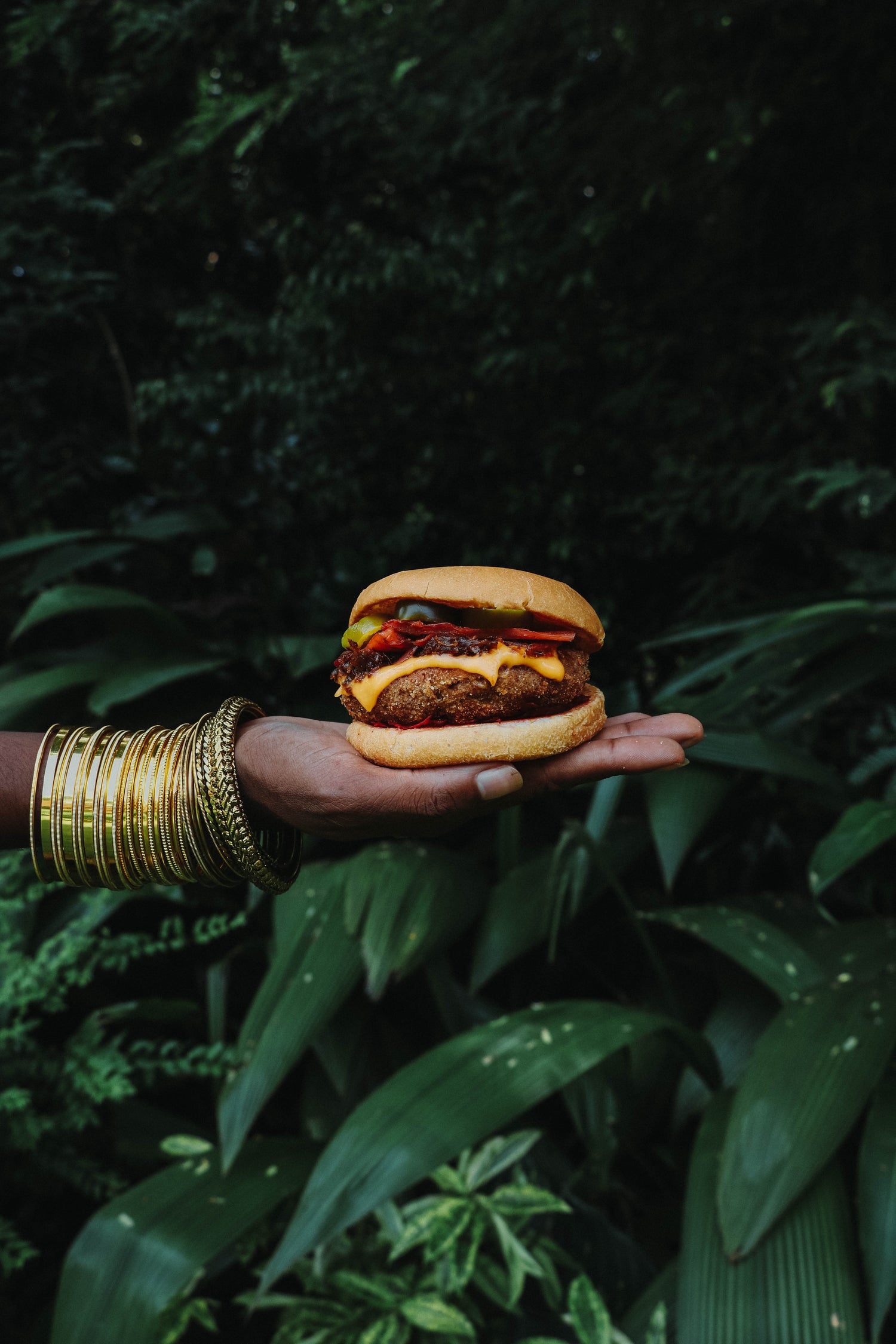
We spend our time in the forests, farms, markets and kitchens of the tropics, finding flavours, ingredients and dishes that deserve a far bigger table. Take Kohila; it grows along the edges of Sri Lanka’s rice fields, restores the soil it grows in and is packed full of fibre. Try it in Jungle Jack.

Empowering Equity
Our production kitchens have been owned and run by women for three generations. That matters. Women grow much of the world’s food and cook most of it, yet almost everywhere they sit at the bottom of the chain that profits from it. We’d like to see that change, starting with our own business.
Food from the centre
For centuries the tropics have shipped out raw crops and bought them back as someone else’s product. Cocoa leaves as beans and returns as chocolate. We think the flavour, the know-how and the value belong closer to where the food grows. We make finished food at the source and put it on shelves under its own name. The future of food will be far more diverse than its past. We want it to taste like that too.